
 Image 1 of 3
 Image 2 of 3
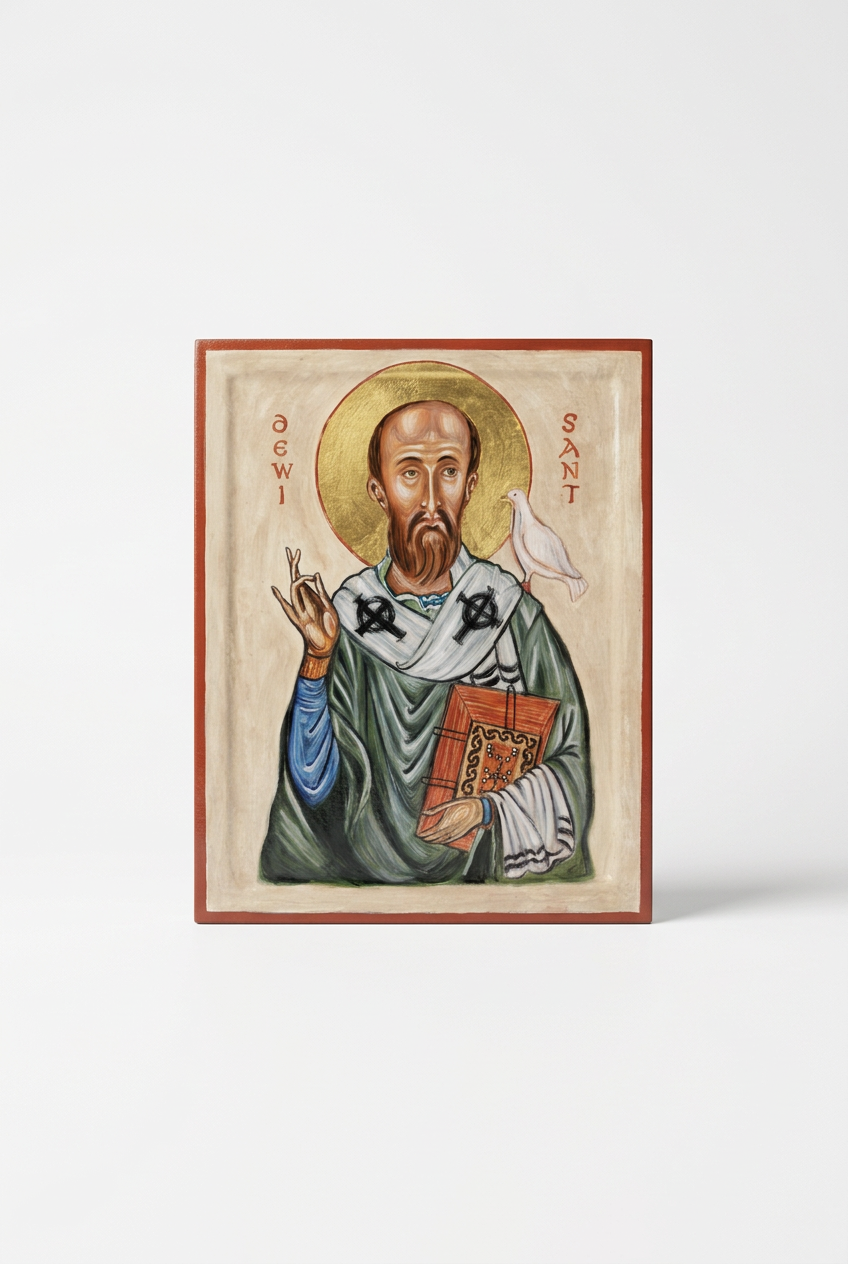 Image 3 of 3
Egg Tempera on Tulip Wood Board with Kivotos Frame, 31 cm x 24 cm.
This icon has a damar varnish finish which appears satin. The icon board has a border to the front face, called a Kovtchec in Russian or Kivitos in Greek. On the reverse side the board has a dovetail rear truss to prevent warping.
St David of Wales (Dewi Sant, c. 500–589) was a sixth-century bishop, monastic founder and the patron saint of Wales. Renowned for his ascetic way of life, humility and devotion to prayer, he established a monastic community at Glyn Rhosyn, where St Davids Cathedral now stands. His monks followed a strict discipline of manual labour, simple living and spiritual devotion, earning him the traditional title Dewi Ddyfrwr (David the Water-Drinker), reflecting his austere practices. St David played a central role in the growth of Christianity in Wales, and his enduring legacy remains a powerful witness to the ancient Christian heritage of the British Isles. His feast day is celebrated on 1 March.