
 Image 1 of 4
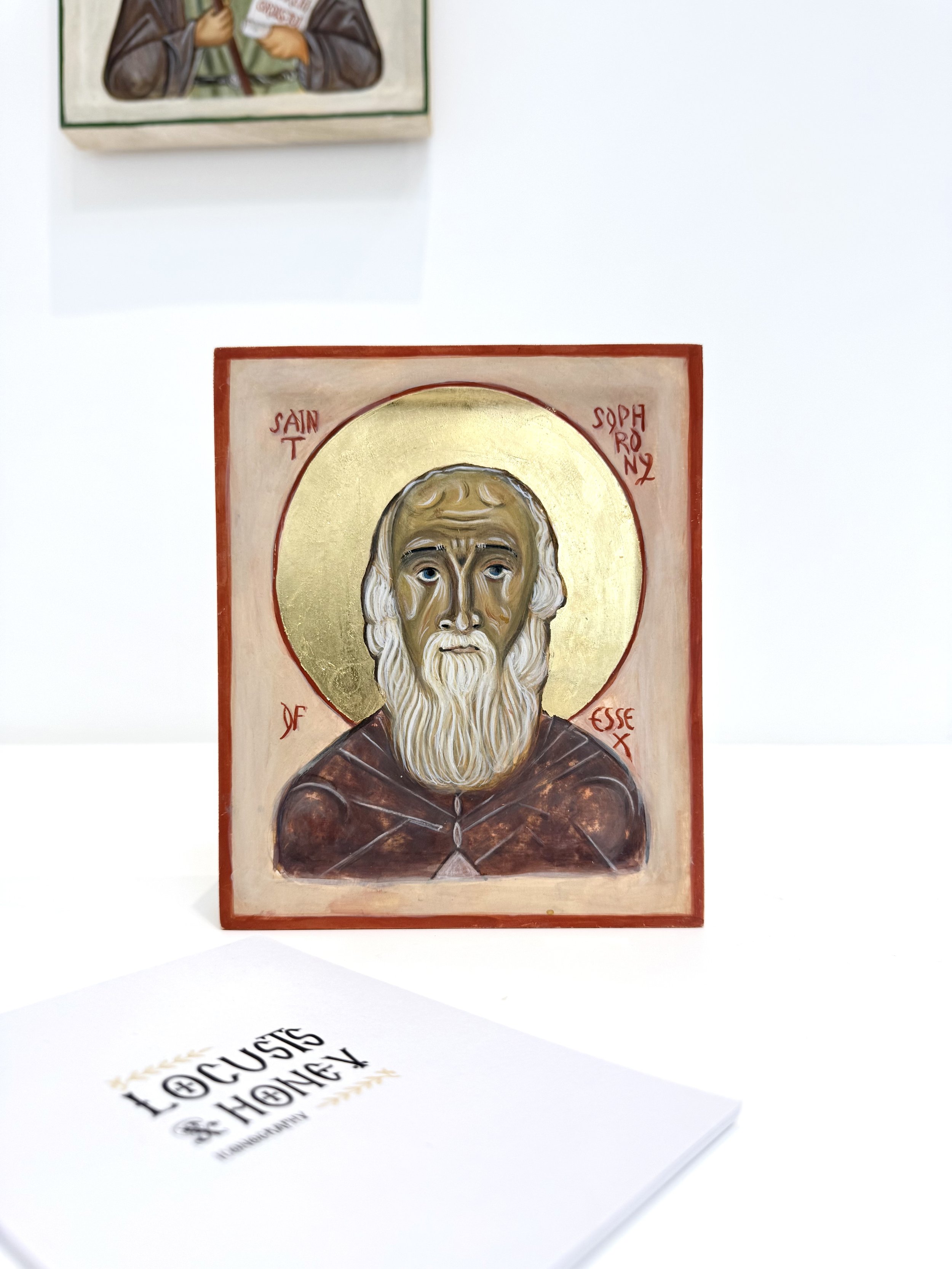 Image 2 of 4
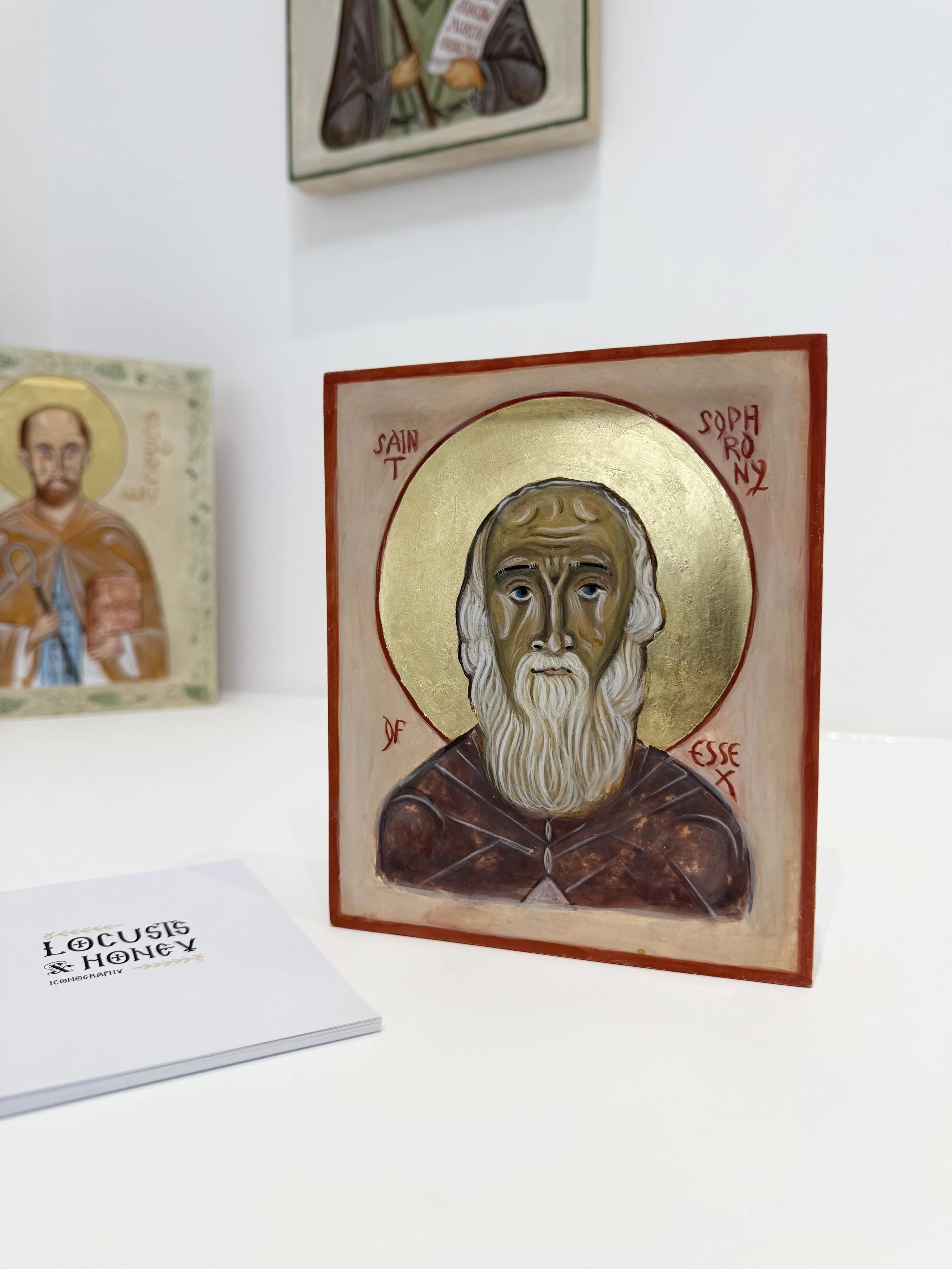 Image 3 of 4
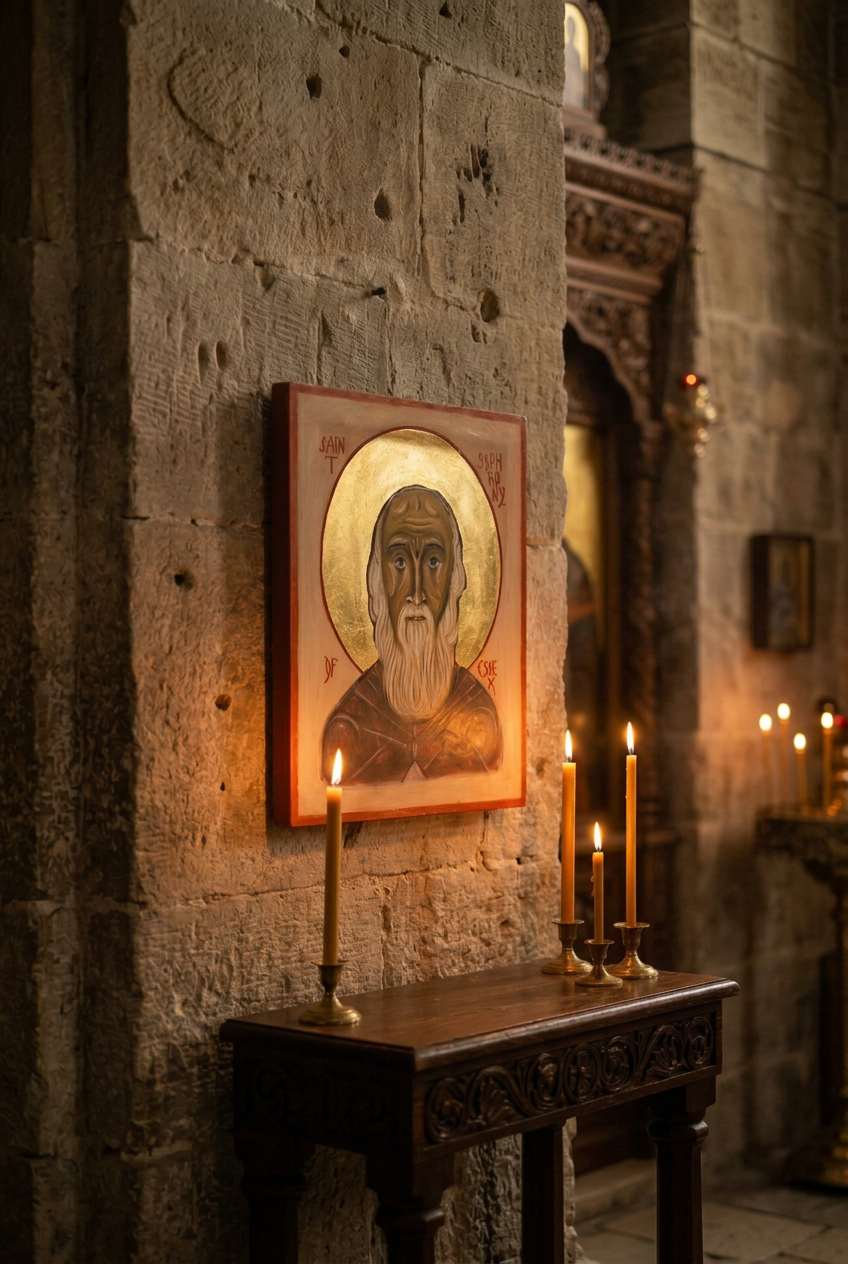 Image 4 of 4
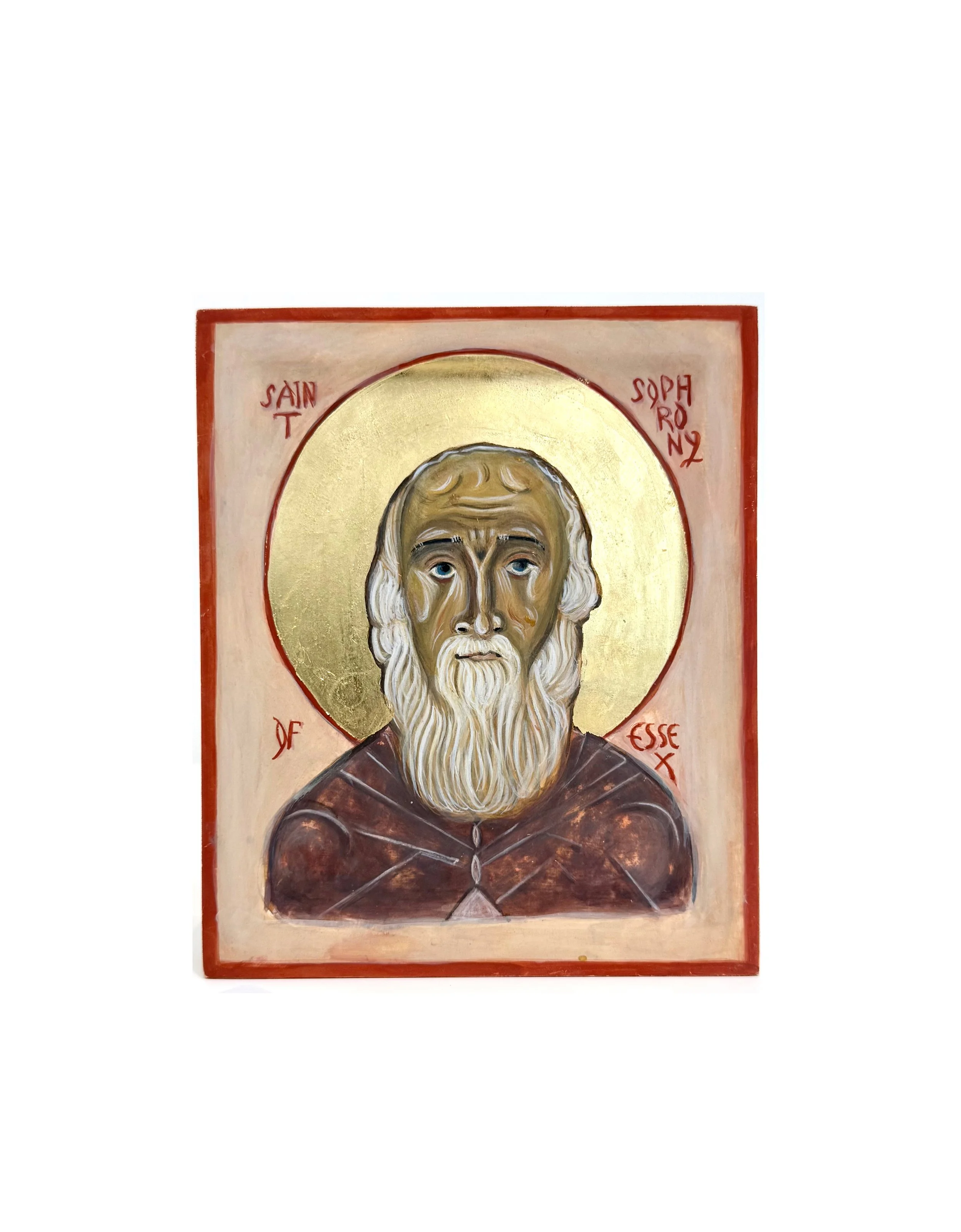
Egg Tempera and 24crt Gold Leaf on Tulip Wood Panel with Kivotos frame, 18 cm x 15 cm.
The icon board has a routed border to the front face, called a Kovtchec in Russian or Kivitos in Greek. This is to emphasise the meeting of the interior divine world with earthly world. In the past, the Kivitos frame would also protect the inner image from wear and tear whilst traveling with the icon.
St Sophrony of Essex (1896–1993) was an Orthodox monk, theologian and spiritual father whose life and teaching were profoundly shaped by his years on Mount Athos under the guidance of St Silouan. Born Sergei Sakharov in Russia, he became known for his profound understanding of prayer, repentance and the knowledge of God through personal encounter.
After leaving Athos, he founded the Monastery of St John the Baptist in Essex, England, where he continued his monastic life and spiritual work. Alongside his theological writings, St Sophrony practised iconography, approaching the sacred image as an expression of prayer and spiritual experience rather than merely an artistic exercise.