
Saint Cadoc
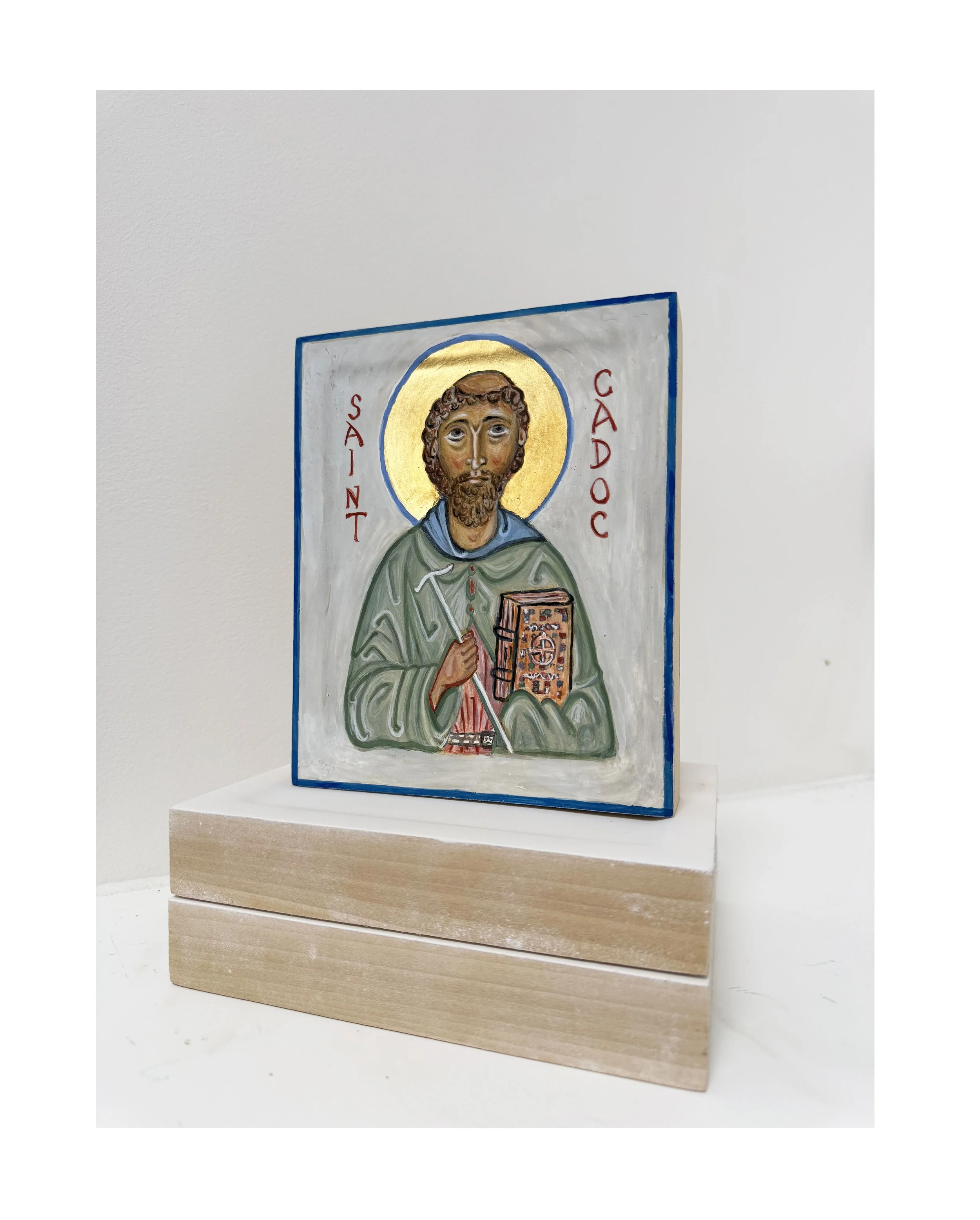
Icon of Saint Cadoc, Egg Tempera on Tulip Wood Panel, 18 cm x 15 cm, 2025
Icon of Saint Cadoc
This small icon of a young zealous Saint Cadoc is made using the traditional method of Egg Tempera. I have used the Fayum Portraits as reference for the face, a type of naturalistic painted portrait from Roman Egypt.
Saint Cadoc’s Life
Saint Cadoc's life was a testament to his unwavering dedication to God and his community. Born around 497 AD in Monmouthshire, Wales, Cadoc was the son of King Gwynllyw the Bearded and Saint Gwladys. Despite his royal lineage, Cadoc refused to take charge of his father's army, choosing instead to "fight for Christ". This pivotal decision led him to found the famous monastery of Llancarfan in the Vale of Glamorgan, a hub of learning and spirituality that attracted scholars and disciples from far and wide.
Early Life and Monastery Founding
Cadoc's journey began when he was sent to study under Saint Tathyw at Caerwent. He later traveled to Ireland for further studies and eventually returned to Wales to spread Christianity. The site of Llancarfan monastery was initially a marshy and barren land, but Cadoc and his monks worked tirelessly to drain and cultivate it, transforming it into a thriving community.
Miracles and Encounters
According to legend, Saint Cadoc's monastery at Llancarfan was built with the help of a pair of stags. The story goes that Cadoc and his monks were struggling to haul the necessary materials for the construction of the monastery. Two stags appeared and offered their services, allowing Cadoc to harness them to the carts and use them to transport the building materials.
This miraculous event not only showcased the stags' strength and willingness to help but also demonstrated Cadoc's connection with nature and the divine. The stags' involvement in the construction of the monastery has become an enduring part of Cadoc's story, symbolising the harmony between humans and animals and the power of faith.
One other notable story associated with Cadoc is his encounter with King Arthur. When Cadoc gave sanctuary to a man who had killed three of Arthur's warriors, the king demanded a herd of cattle as compensation. Cadoc delivered the cattle, but they miraculously transformed into bundles of ferns when Arthur took possession of them. This encounter showcased Cadoc's divine connection and Arthur's humility.
Cadoc was also known for his kindness and compassion. When a wolf stole meat from the monastery kitchen, Cadoc commanded the wolf to return the stolen food, and it obeyed. This miracle demonstrated Cadoc's authority and benevolence.
Legacy
Throughout his life, Cadoc founded several churches and monastic settlements in Wales, Scotland, and Brittany. His influence extended beyond Wales, with records indicating his presence in parts of England and France. After his passing, his monastery at Llancarfan became a place of pilgrimage, with visitors seeking his intercession and blessings.
Saint Cadoc's life was a testament to his unwavering dedication to God and his community. Born around 497 AD in Monmouthshire, Wales, Cadoc was the son of King Gwynllyw the Bearded and Saint Gwladys. Despite his royal lineage, Cadoc refused to take charge of his father's army, choosing instead to "fight for Christ". This pivotal decision led him to found the famous monastery of Llancarfan in the Vale of Glamorgan, a hub of learning and spirituality that attracted scholars and disciples from far and wide.